
Introducing
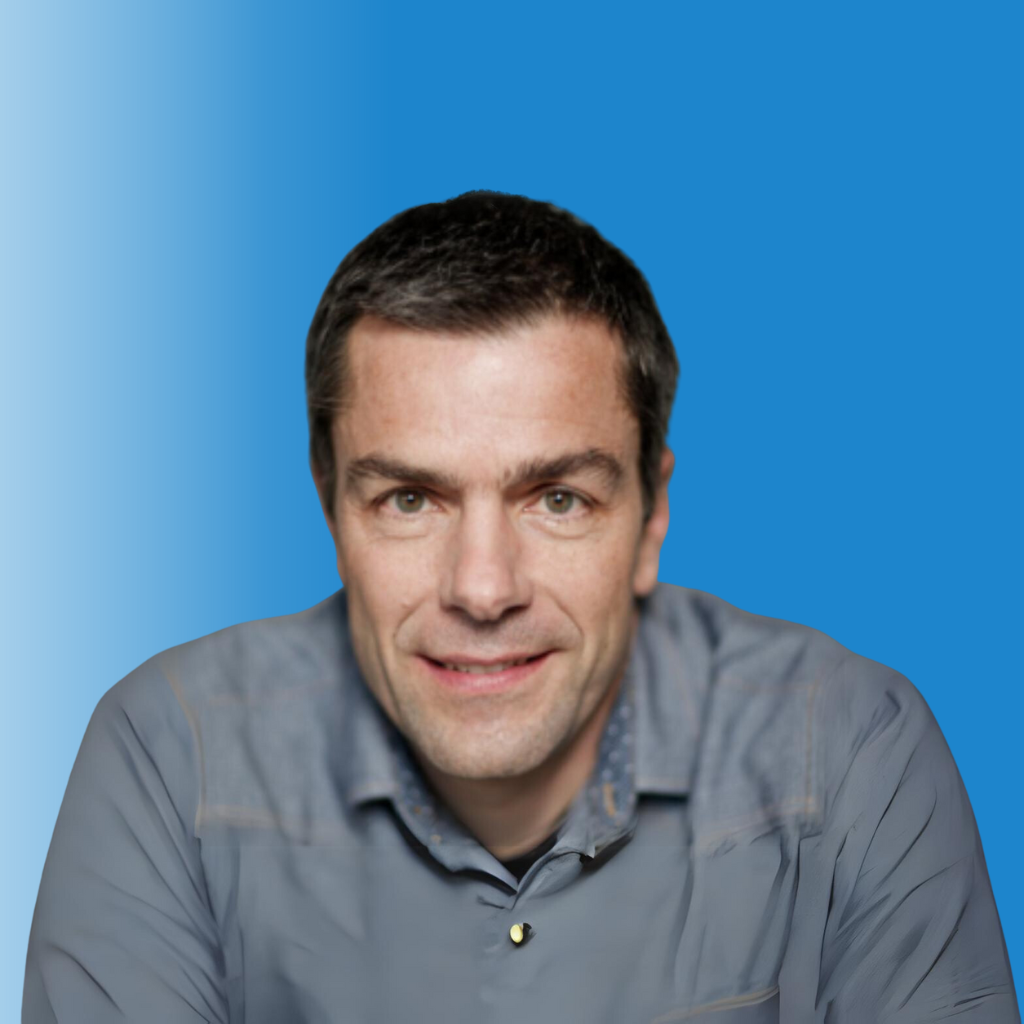
Expert Statistical Scientist at Roche
Kaspar is an Expert Statistical Scientist in Roche’s Methods, Collaboration, and Outreach group, and is located in Basel.
He does methodological research, provides consulting to Roche statisticians and broader project teams, gives biostatistics training for statisticians and non-statisticians in- and externally, mentors students, and interacts with external partners in industry, regulatory agencies, and the academic community in various working groups and collaborations.
He has co-founded and co-leads the European special interest group “Estimands in oncology” (sponsored by PSI and EFSPI, which also has the status as an ASA scientific working group, a subsection of the ASA biopharmaceutical section) that currently has 39 members representing 23 companies, 3 continents, and several Health Authorities. The group works on various topics around estimands in oncology.
Kaspar’s research interests are methods to optimize study designs, advanced survival analysis, probability of success, estimands, and causal inference, estimation of treatment effects in subgroups, and general nonparametric statistics. Before joining Roche, Kaspar received training and worked as a statistician at the Universities of Bern, Stanford, and Zurich.
More on the oncology estimand WG: http://www.oncoestimand.org
More on Kaspar: http://www.kasparrufibach.ch
Never miss an episode!
Join thousends of your peers and subscribe to get our latest updates by email!
Get the
Managing Hype in Statistics
with Kaspar Rufibach
Have you ever felt overwhelmed by the constant waves of innovation in our field?
How do we, as statisticians, manage the hype surrounding new trends like AI and machine learning?
Today, I’m thrilled to have Kaspar back on the show! We explore these recurring waves of innovation that promise to revolutionize our industry—from data mining and big data to real-world evidence and, most recently, AI and machine learning. These trends often come with high expectations, pressuring us to validate our value amid the hype.
We discuss the pressures we face within organizations, the importance of rigorous and honest assessments, and strategies for building trust and reputation.
Join us as we navigate the complexities of managing hype and maintaining our vital role in drug development.
Key Points of the Episode:
- Innovation Waves: Data mining, big data, real-world evidence, AI, machine learning.
- Hype Management: Handling initial excitement, and realistic expectations.
- Pressure on Statisticians: Validation of value, skepticism from stakeholders.
- Rigor and Honesty: Importance of rigorous assessments, and clear assumptions.
- Building Trust: Establishing credibility within organizations.
- External Pressure: Influence of consultants and external vendors.
- Practical Examples: Futility analysis, real-world data usage.
- Proactive Approach: Staying ahead of trends, internal and external communication.
- Reputation and Networking: Internal trust, external credibility.
- Implementation Challenges: Balancing innovation with practical application.
- Educational Initiatives: Internal seminars, panel discussions, expert invitations.
- Simple Solutions: Focusing on fundamental, proven methods.
If you enjoyed this episode, share it with your friends and colleagues. Your support helps us reach more statisticians and data scientists, keeping us all informed and proactive in our work. Don’t forget to subscribe for more episodes featuring expert advice and industry insights.
Join The Effective Statistician LinkedIn group
This group was set up to help each other to become more effective statisticians. We’ll run challenges in this group, e.g. around writing abstracts for conferences or other projects. I’ll also post into this group further content.
I want to help the community of statisticians, data scientists, programmers and other quantitative scientists to be more influential, innovative, and effective. I believe that as a community we can help our research, our regulatory and payer systems, and ultimately physicians and patients take better decisions based on better evidence.
I work to achieve a future in which everyone can access the right evidence in the right format at the right time to make sound decisions.
When my kids are sick, I want to have good evidence to discuss with the physician about the different therapy choices.
When my mother is sick, I want her to understand the evidence and being able to understand it.
When I get sick, I want to find evidence that I can trust and that helps me to have meaningful discussions with my healthcare professionals.
I want to live in a world, where the media reports correctly about medical evidence and in which society distinguishes between fake evidence and real evidence.
Let’s work together to achieve this.

